

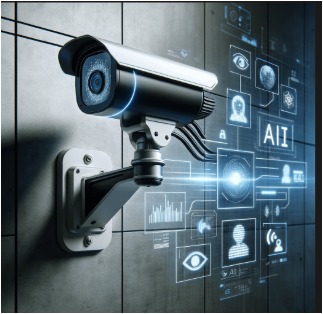
What is CCTV technology?
Closed-circuit Television (CCTV) is a video security technology designed to transmit signals within a closed network to specific locations for viewing. CCTV technology is a collective term for the main components of a CCTV security system, including cameras, video recorders, operating software, video management systems and smart video analytics solutions.
Security camera technology provides property owners and security teams with live footage of key locations, helping to protect people and assets from security threats and secure evidence of suspicious activities to aid investigations. CCTV cameras can also deter crime by showing intruders that a site is actively monitored.
AI smart analytics technology transforms footage into big data
The use of AI is one of the 2026 video security trends. AI makes it possible to convert hours of previously redundant footage into data, which can then be analyzed for video security trends and patterns. Previously, security teams learned from manually identified incidents. Now, they can learn more from hours of untapped video that were previously skipped over. With this valuable insight, more businesses are seeing the need to adopt AI video analytics and are budgeting accordingly.
One of this year’s most significant commercial security camera trends is leveraging video analytics technology to generate big data. Below are some of the factors driving its growth.
Deep learning and analytics
Deep learning is a relatively new security camera technology and one of the latest security camera trends to be adopted by mainstream manufacturers across the commercial security camera industry.
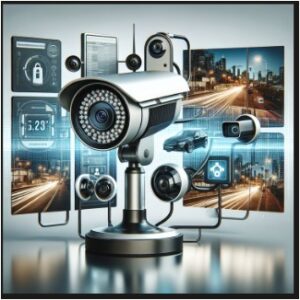 AI video analytics utilizes advanced software to understand what’s happening in video footage. It can automatically identify people, objects and vehicles in real-time, similar to how our brains recognize familiar sights. This technology allows modern security cameras to go beyond simply recording video; they can now analyze it to detect potential problems and provide valuable insights.
When imbued with deep learning capabilities, CCTV technology can gradually become better at detecting stimuli in specific locations. The longer a system analyzes a target area, the more accustomed it becomes to regular activity and the more consistently it can detect anomalies.
To understand why deep learning and video analytics are major 2026 video security trends, it can help to define their key benefits:
- Improved decision-making: Insights from deep learning CCTV technology can help human teams confirm or deny theories about security events, acting as a data-backed reference to inform the performance of event responses and system enhancements.
- Increased efficiency: Deep learning analytics software can continuously monitor a target area indefinitely with no drop in detection accuracy, enabling teams to focus on more complex issues and make more efficient use of resources.
- Enhanced detection accuracy: As AI analytics tools discern threats based on hard data and provable behavior patterns, their accuracy is not impacted by distractions or inconclusive evidence, allowing for consistently accurate security operations.
- Integration and automation opportunities: AI-powered security camera technology can be integrated with security devices, such as sensors, alarms and access readers, to support automated responses. This enables entire security installations to benefit from deep learning technology.
While advanced video surveillance technology in 2026 will benefit from trends like deep learning and AI analytics, security professionals and CCTV monitoring aren’t likely to be replaced by such tools. AI is more appropriately viewed as a supportive technology, providing human teams with an extra opportunity to accurately analyze and gain insights into security events.
Edge computing
The growth of edge computing is a major technological shift in the security camera industry and a key 2026 CCTV trend. Edge computing refers to systems that perform functions at the device rather than at a separate server, enabling high-quality insights to be generated with less latency.
In terms of surveillance camera technology, edge systems utilize video camera analytics to process video data at the point of recording, with the benefit that security personnel can better understand real-time events via advanced analytical processing quickly, accurately and reliably.
Below are some key benefits of this latest trend in CCTV technology:
- Reduced latency: Edge systems process video at the camera, using analytics tools to identify footage that may require human review. This workflow means less data needs to be sent to separate systems, improving transfer speeds and reducing latency.
- Improved bandwidth efficiency: As edge CCTV technology processes data locally, the data that is transferred is more efficiently packaged, helping to reduce bandwidth usage.
- Faster incident responses: At-device analysis via edge computing enables alerts and automated responses to be triggered much faster, improving response times.
- Enhanced data privacy: The more data that’s processed at the device, the less needs to be sent elsewhere, removing avenues for sensitive information to be intercepted.
Edge computing stands at the forefront of the latest CCTV camera technology trends, with the benefits of at-device processing supporting innovation in wider surveillance technologies. As seen with CCTV’s role in reducing crime in the UK, edge analysis is likely to inform future CCTV innovations as it becomes more common.